GENIUS.
PRECAUTIONS TO TAKE BEFORE CHARGING.
Use the following precautions when you work near lead-acid batteries.
General Safety Precautions:

Wear complete eye protection and protective clothing.
Avoid touching your eyes while working near a battery. If battery acid contacts your skin or clothing, wash immediately with soap and water. If acid enters an eye, flood the eye with cold running water for at least ten (10) minutes and seek medical attention immediately.

Have plenty of fresh water and soap nearby.
Have plenty of fresh water and soap nearby in case battery acid contacts skin, clothing, or eyes.

Use caution when handling metal tools around a battery.
Dropping a metal tool near the battery may cause sparks or create a short circuit between the terminals and another metal part. This can result in an electrical shock hazard, fire, or explosion, leading to property damage, personal injury, or death.

Never smoke or allow open sparks or flames.
Never smoke or allow open sparks or flames near the battery or engine.

Remove all metal personal items.
Remove all metal personal items (rings, bracelets, necklaces, watches) when working with a lead-acid battery. A lead-acid battery can produce enough current to weld jewelry to the skin, causing severe burns.

DO NOT USE WITH DRY-CELL BATTERIES.
This battery charger is for charging LEAD-ACID BATTERIES ONLY. DO NOT use the battery charger with dry-cell batteries commonly found in home appliances. These batteries may burst and cause property damage, personal injury, or death. NEVER charge a frozen battery.
Before Charging:

- Turn off or disconnect all accessories in the vehicle to avoid an electric arc (or spark). Always remove the cable connected to the grounded terminal first.
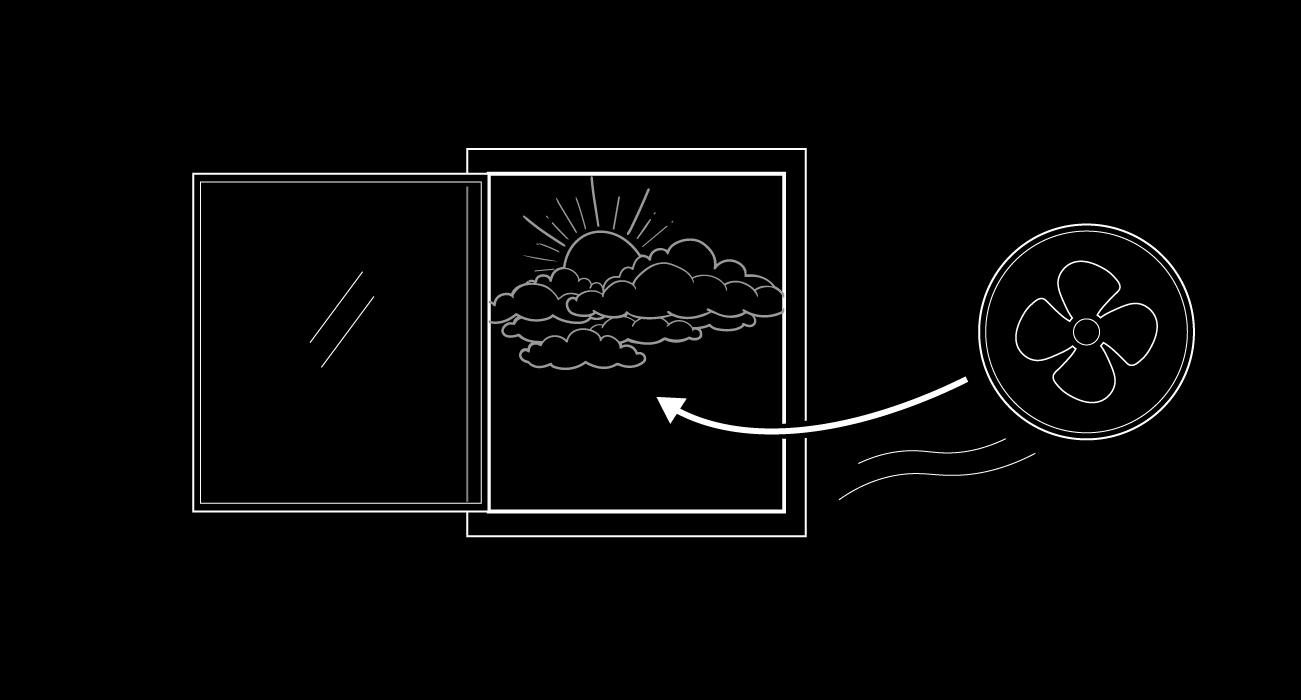
- Ensure the area around the battery is well-ventilated while charging. If needed, use a non-metallic material to disperse any gas buildup.
- Clean the battery terminals if necessary.
Be careful to prevent corrosion or debris from contacting your skin or eyes.
- Check the water level if the battery is not sealed.
Add distilled water to each cell (if required) until the electrolyte reaches the level specified by the manufacturer. Do not overfill.
For batteries without cell caps, such as VRLA (valve regulated lead-acid) batteries, follow the manufacturer’s specific charging instructions.
- Read the battery manufacturer’s precautions and recommended charging rates before charging.
- Verify the battery’s voltage using the vehicle owner's manual and make sure the charger is set to the correct voltage mode.
- Connect and disconnect the DC output cables only when the charger is in STANDBY and the AC cord has been removed from the electrical outlet.
Never allow the battery clamps or eyelet terminal connectors to touch each other.
Locating the Battery Charger:
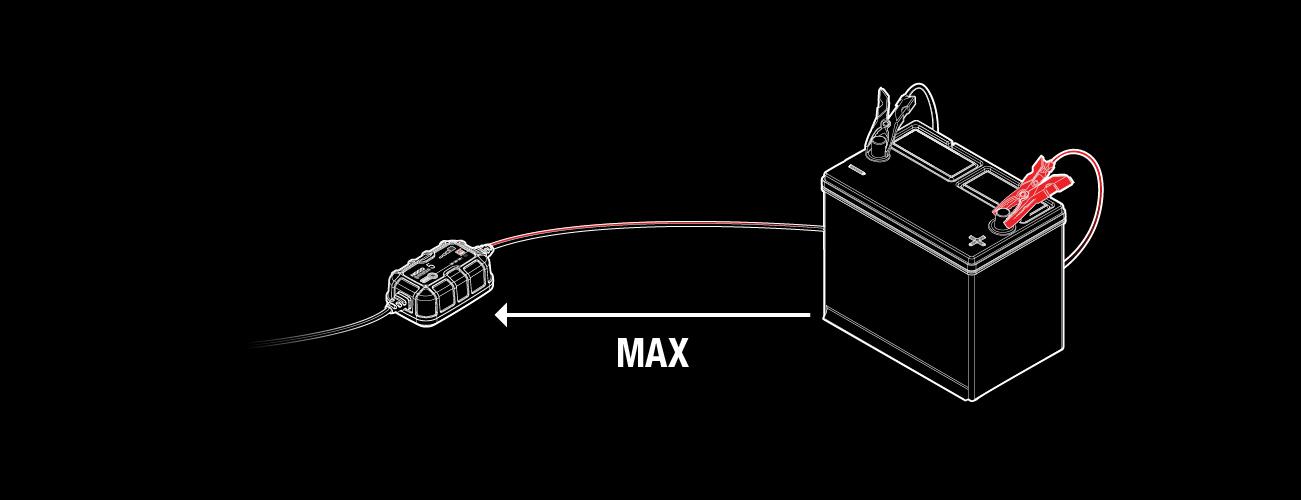
1 | Place the battery charger as far away from the battery as possible.
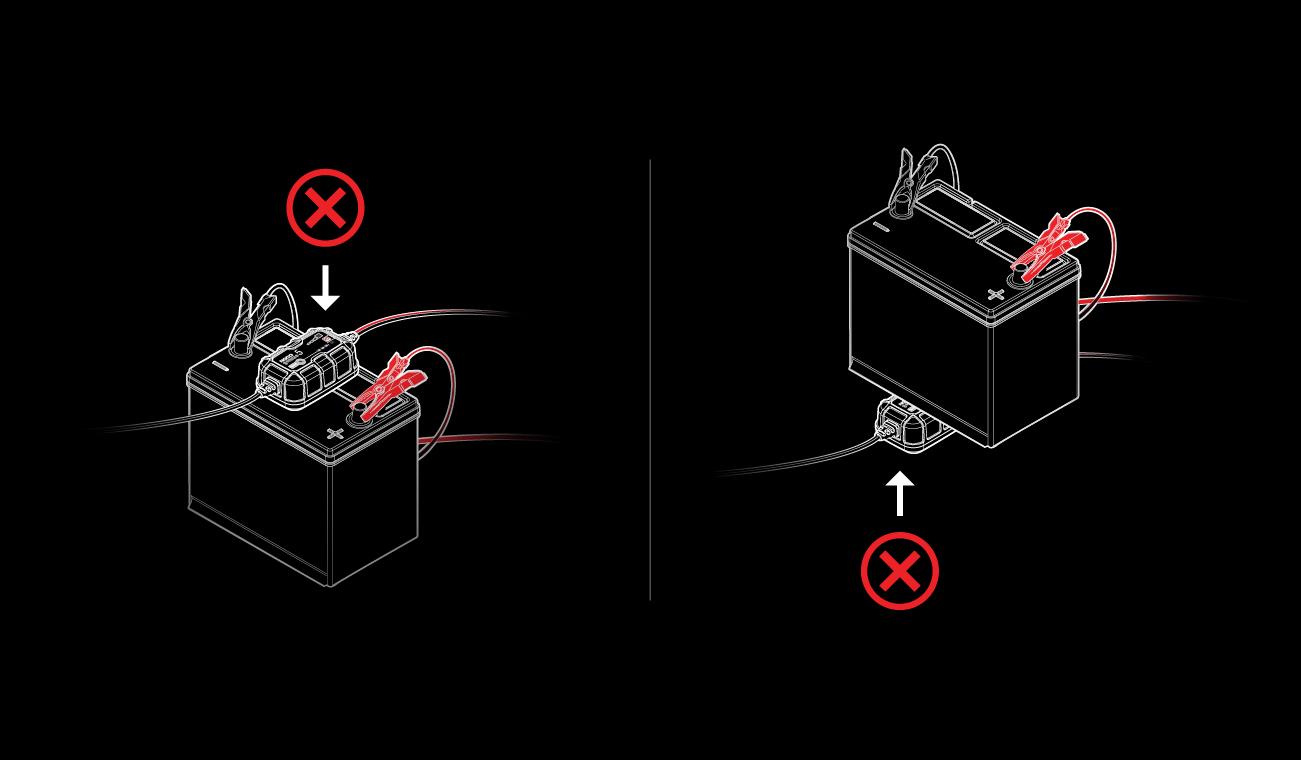
2 | Never position the charger directly above the battery.
Gases from the battery can rise and corrode or damage the charger.
Never place a battery on top of the charger.
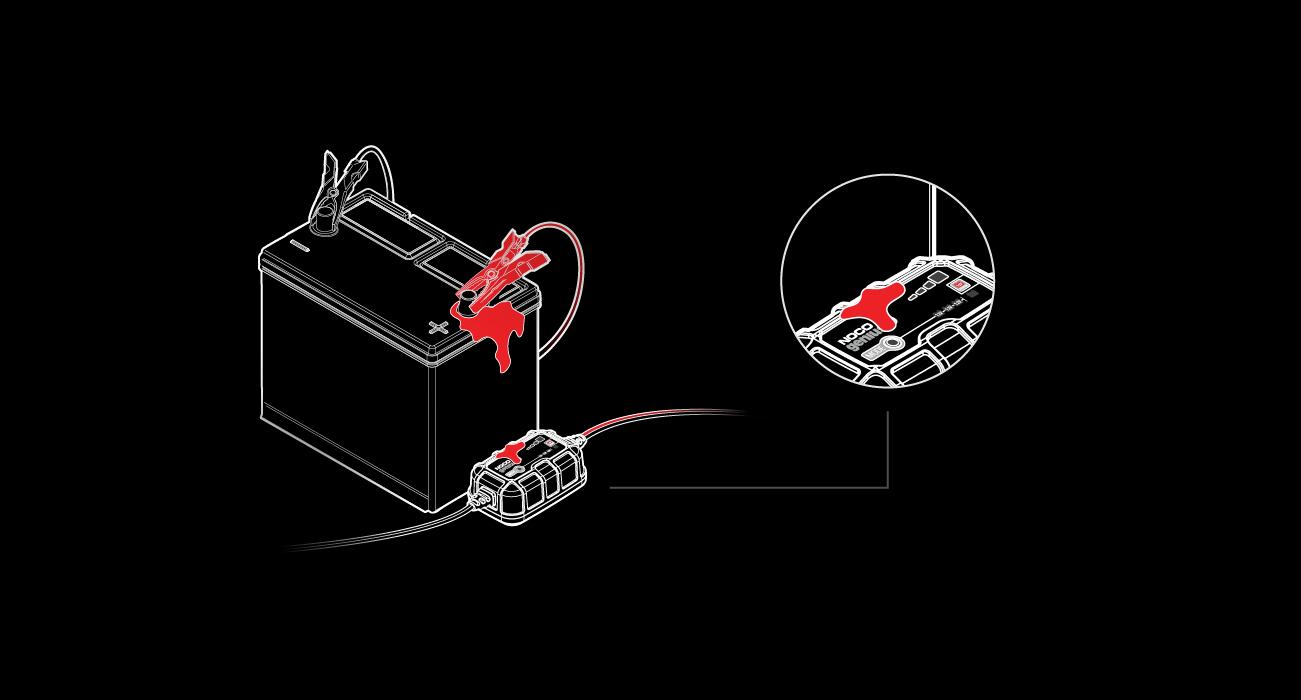
3 | Prevent any battery acid from contacting the charger.
4 | Do not operate the charger in a closed or poorly ventilated area.
Cookies On This Site
Our website uses cookies, pixels, and similar technology (“Cookies”) to make the website work and to improve your online experience. Cookies that are essential for the functioning of our website are always active and cannot be turned off. With your consent, however, we may also use non-essential Cookies to improve user experience, personalize advertisements, and analyze website traffic. By clicking “Accept All,” you consent to our use of all Cookies, including these non-essential Cookies. You may block non-essential Cookies by clicking “Reject,” or change your cookie settings by clicking “Preferences.”
By using our website, you acknowledge this notice, and by clicking “Accept All,” “Reject,” or “Preferences,” you agree to our Website Terms of Use. See our Cookie Policy and Privacy Policy to learn more.