Identifying a Bad Battery.
Help identify if your battery needs replacement or repair.
Inspect the Battery's Physical Condition
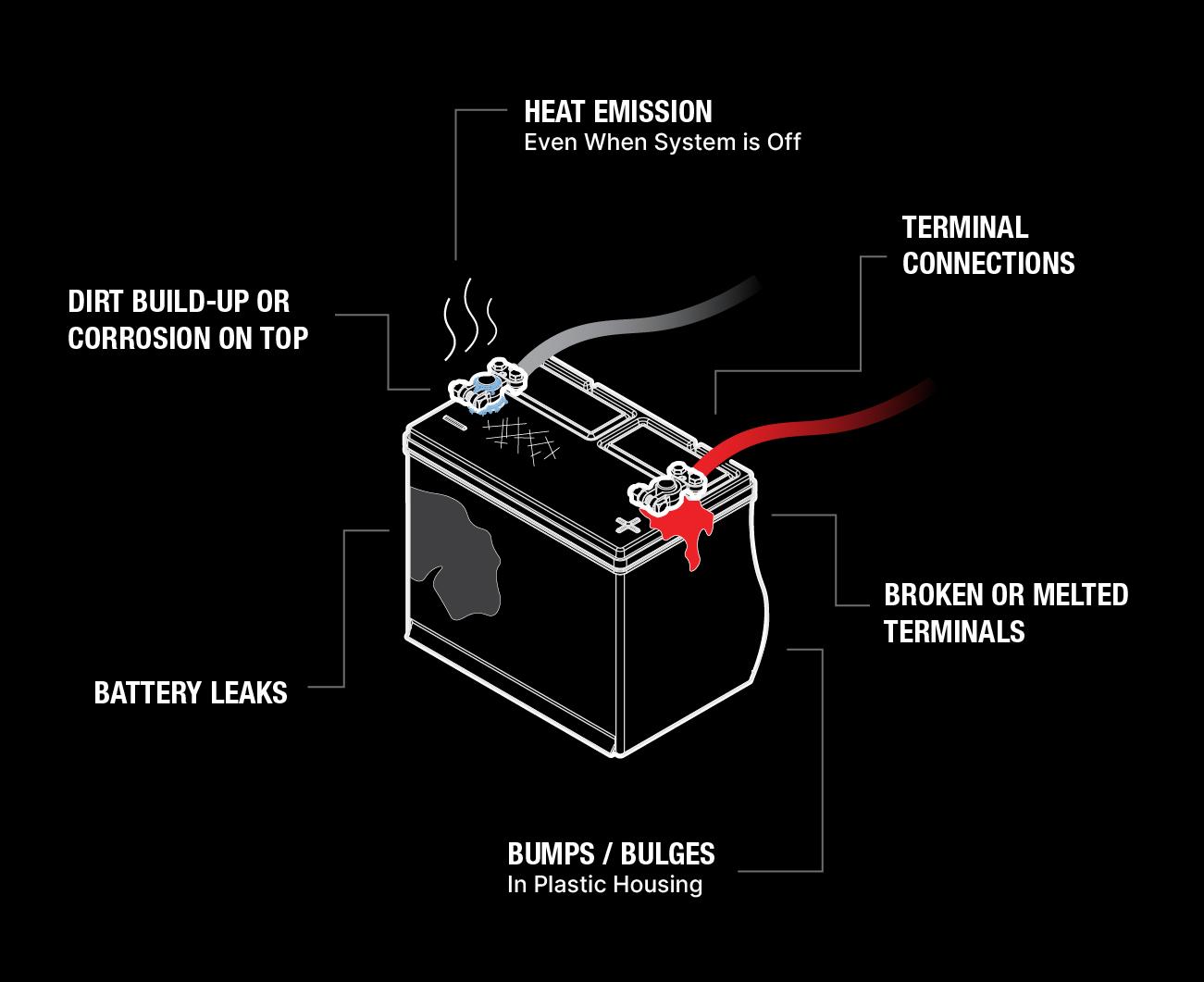
Ask yourself these questions to diagnose potential issues:
- Are the terminals fully connected?
- Are there any bumps or bulges in the plastic housing?
- Is the battery leaking?
- Is a terminal broken or melted?
- Is there a large build-up of dirt or corrosion on the top of the battery?
- Is the battery giving off heat (even when the system is turned off)?
If the battery is a wet-cell (flooded) battery, make sure the water level is maintained with distilled water. If the terminals are loose or disconnected, simply reconnecting them should fix the issue. Aside from cleaning mild corrosion with a wire brush and NOCO Battery Cleaner, the rest of these signs may indicate a bad battery. Take the battery to your local automotive store and have it inspected by a professional.
Load Test the Battery
Take a Voltage Reading with a Voltmeter
It is recommended to keep the battery above 75% (at least 12.4V for a 12V battery) for overall health and longevity. If the battery is below 75%, it is likely beginning to sulfate. Sulfation is a natural byproduct of a battery producing energy.
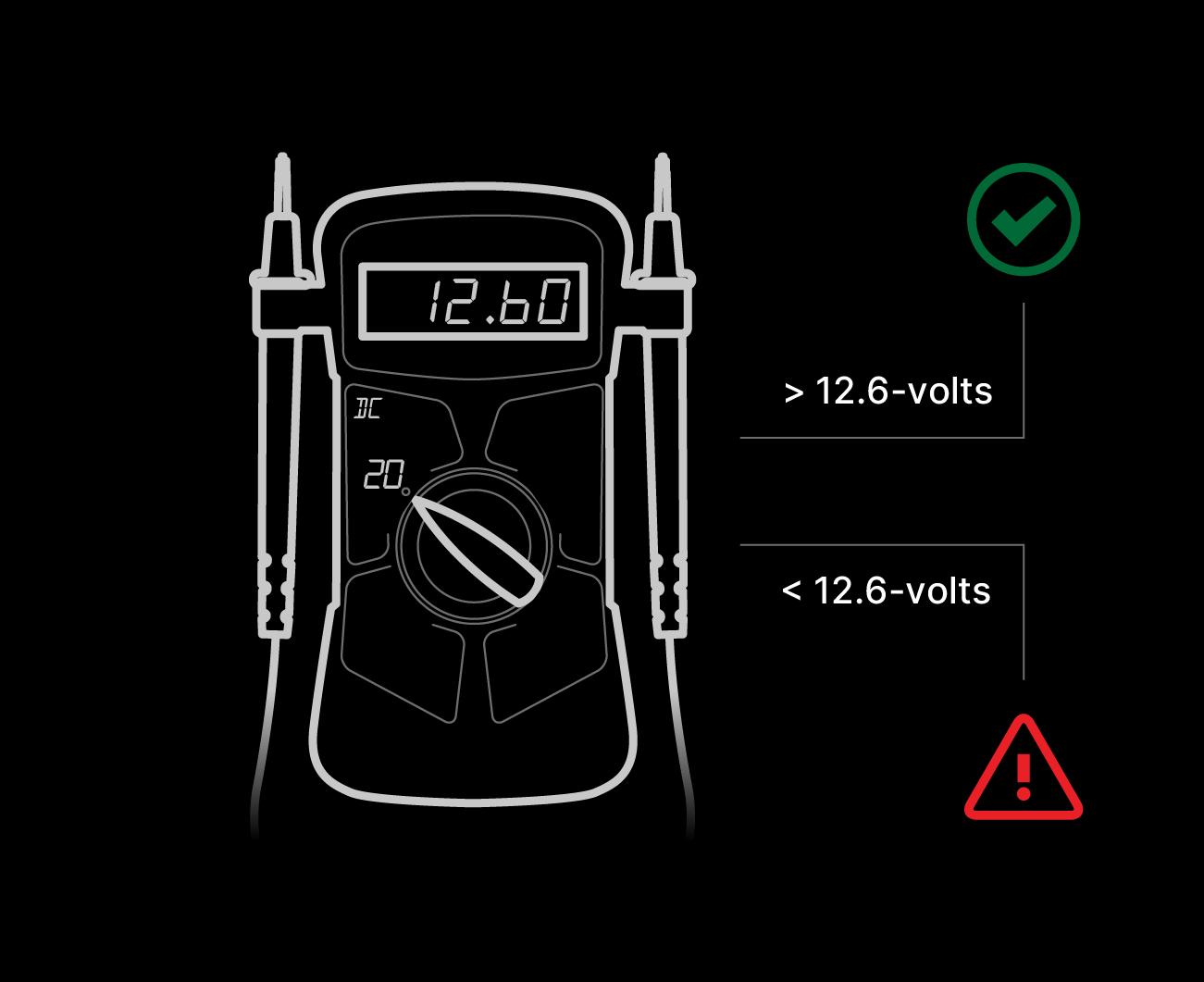
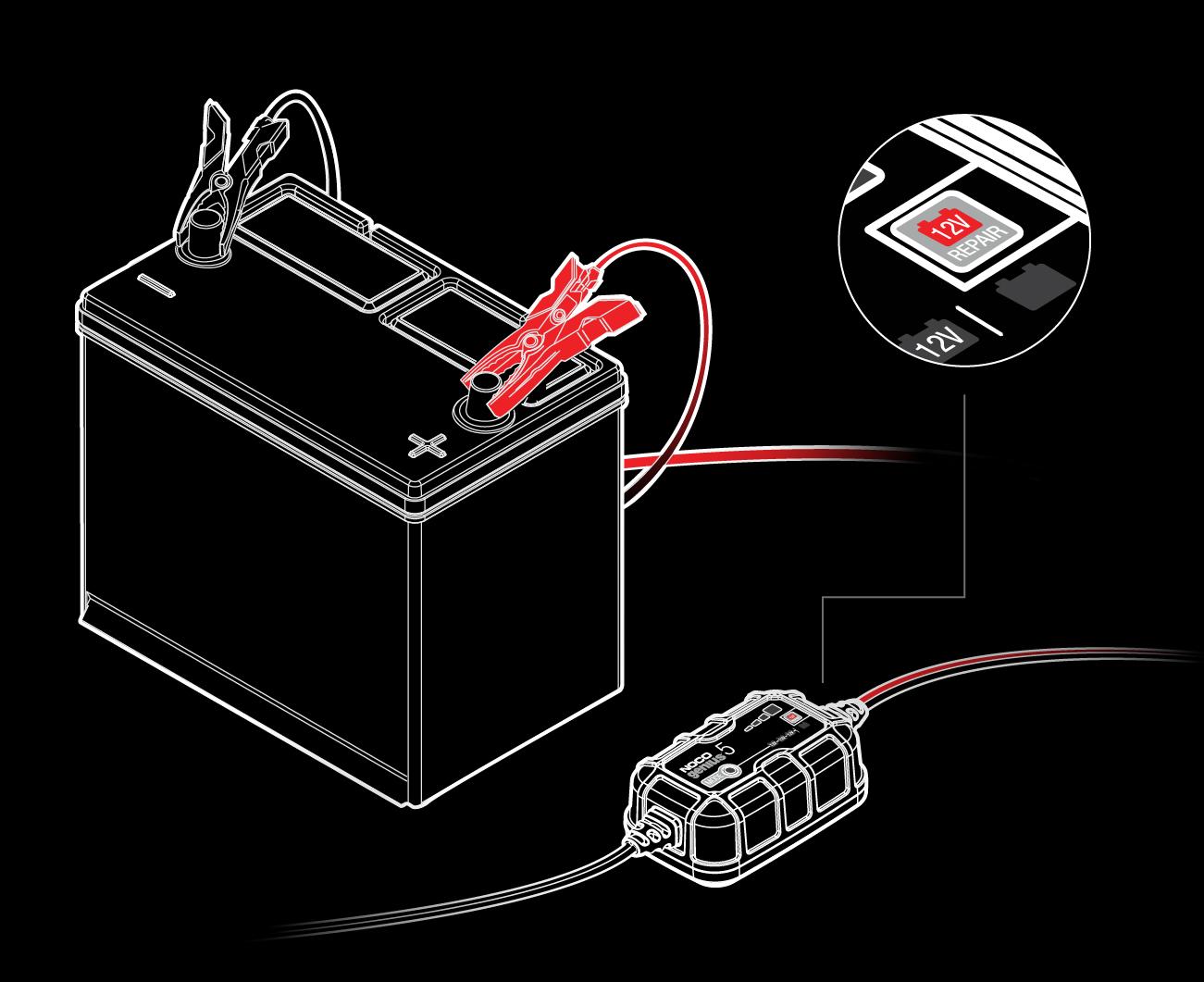
If your battery has started to sulfate, use the Repair Mode on a NOCO GENIUS5 Charger, NOCO GX Charger, or any model above to help desulfate the battery. If the voltmeter reads 0V, it is likely that a fuse or another connection has been blown and needs to be replaced.
Load Test at an Authorized Reseller
A local automotive shop, such as an authorized NOCO reseller like AutoZone, will be more than capable of load testing your battery. While it’s possible to perform a basic load test at home using a digital voltmeter and a fully charged battery, a professional will be able to diagnose any issues that may come up regarding the battery’s overall health.
Cookies On This Site
Our website uses cookies, pixels, and similar technology (“Cookies”) to make the website work and to improve your online experience. Cookies that are essential for the functioning of our website are always active and cannot be turned off. With your consent, however, we may also use non-essential Cookies to improve user experience, personalize advertisements, and analyze website traffic. By clicking “Accept All,” you consent to our use of all Cookies, including these non-essential Cookies. You may block non-essential Cookies by clicking “Reject,” or change your cookie settings by clicking “Preferences.”
By using our website, you acknowledge this notice, and by clicking “Accept All,” “Reject,” or “Preferences,” you agree to our Website Terms of Use. See our Cookie Policy and Privacy Policy to learn more.